
How well can you separate the truth from what’s fake? And do you know when a statement of someone is based on facts or when it is just an opinion? The way information is shared can trick with your mind and can make you believe in things that are not true.
That’s why I want to talk with you about how to fact-check the news you consume. Freedom is the power or right to act, speak, or think as one wants without hindrance or restraint, but if you use this freedom to share something that is not real then it could have huge consequences.
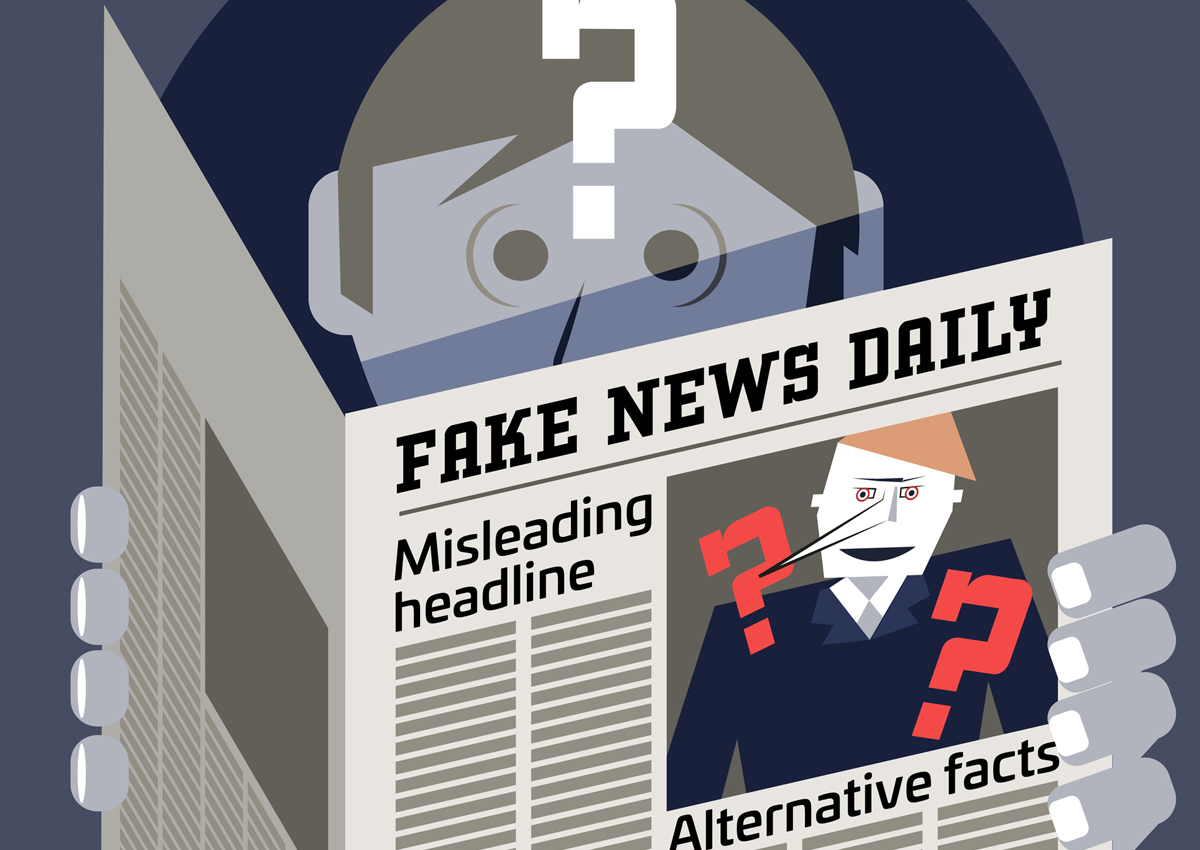
The dangerous of Fake news
I think that a lot of people don’t see the consequences of sharing fake news. I understand that your fake comment or post can look innocent and that the impact of it depends on a lot more than just the text itself, but we have to understand that if we all start sharing fake news, there will be a point where we don’t know what to believe anymore.
“Lies can become truth if we let them in”
~ CNN “Facts First Campaign.

And it is hard. We get bombarded with news every day. Every second there are new stories uploaded in the air. But one we can protect the credibility of information is to fact check it, but the problem is that nobody wants to take more than a couple of minutes to check if something is real or not.
how do teenagers know their differences of they are not educated in it? I think that if you start teaching at high schools about the impact of sharing content and how to know information is real, and teach them quick methods, we will decrease the impact of fake news in our society.
Researches have shown that especially students are vulnerable to fake news. Stanford professor Sam Wineburg tested 7,800 teenagers about their ability to separate from real news and sponsored advertisements from news articles. So the answer to the question; How do we remain informed citizens in a world with fake news, is I believe a professor of Stanford named Sam Wineburg sees in educating teenagers at school because teenagers are the future and if they know the difference, the future will.
For example, Assuming that sponsored content is always real is something a lot of people do. Unfortunately, this is not always the case. By sponsored content, the context is always in the benefit of the sponsor which makes the content biased. A big misunderstanding is using sources like Facebook, Twitter or Instagram to cite your information. The social media platforms are meant to share information but will not filter your information in what is real or fake.
“Twitter users seem almost to prefer sharing falsehoods”
Robinson Meyer, The Atlantic
Political influence
The use of social media has also changed the way politicians communicate with their audience. Especially at the last election, it becomes pretty clear that the way candidates used social media in their campaign had a huge impact on their rise in popularity. A positive thing is that the use of social media in a political aspect lead to more engagement by the people because Facebook and Twitter made it possible that everyone could follow the elections where and whenever they wanted
More engagement leads to more discussions and due to the M.J. Crocett, it changed the moral outrage, which is an emotion stimulated by certain expressions and behaviors. This can be either positively or negatively. One behavioral response that can activate the moral outrage is gossip, shaming or punishment. So you can imagine that when it the heat of the elections when people started to pick a side, social media became a tool to express emotions. Facts of actions were not primary to choose who could be a better president, it became a personal/emotional preference and people started to use social media as a tool to express those emotions.
And when on top of all information fake news is started to come up, and people can’t see the difference between what is fake or what is real, and they start to believe in the wrong sources and as Donald Trump said in his interview with Chris Wallance for FOX News; “Fake news can tear people apart”, and even worse, a whole nation.
So social media has both good and bad things if it comes to policican discussion, but I believe that when we get the spreading of fake news more under control by teaching at high schools how to fact-chck in fast way and what the impact can. be by sharing fake news, social media will a more benefitical and good for the politican discussion.
~ Daphne Nierop, DFreshWriting
 Daphne Nierop