How to Fact-check the News

How well can you separate the truth from what’s fake? And do you know when a statement of someone is based on facts or when it is just an opinion? The way information is shared can trick with your mind and can make you believe in things that are not true.

That’s why I want to talk with you about how to fact-check the news you consume. Freedom is the power or right to act, speak, or think as one wants without hindrance or restraint, but if you use this freedom to share something that is not real then it could have huge consequences.
The dangerous of Fake news

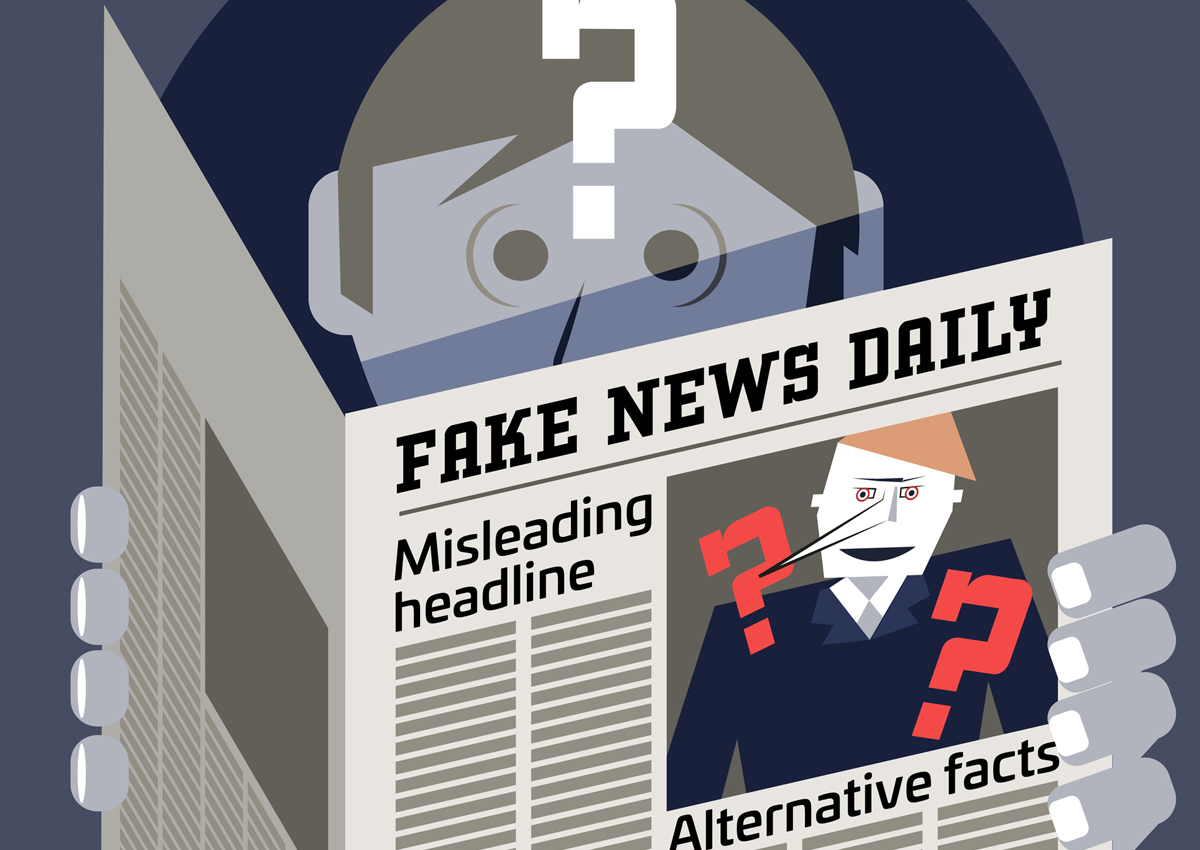
I think that a lot of people don’t see the consequences of sharing fake news. I understand that your fake comment or post can look innocent and that the impact of it depends on a lot more than just the text itself, but we have to understand that if we all start sharing fake news, there will be a point where we don’t know what to believe anymore.

“Lies can become truth if we let them in”

~ CNN “Facts First Campaign.
Sam Wineburg, Professor at Stanford University

And it is hard. We get bombarded with news every day. Every second there are new stories uploaded in the air. But one we can protect the credibility of information is to fact check it, but the problem is that nobody wants to take more than a couple of minutes to check if something is real or not.

how do teenagers know their differences of they are not educated in it? I think that if you start teaching at high schools about the impact of sharing content and how to know information is real, and teach them quick methods, we will decrease the impact of fake news in our society.

Researches have shown that especially students are vulnerable to fake news. Stanford professor Sam Wineburg tested 7,800 teenagers about their ability to separate from real news and sponsored advertisements from news articles. So the answer to the question; How do we remain informed citizens in a world with fake news, is I believe a professor of Stanford named Sam Wineburg sees in educating teenagers at school because teenagers are the future and if they know the difference, the future will.

For example, Assuming that sponsored content is always real is something a lot of people do. Unfortunately, this is not always the case. By sponsored content, the context is always in the benefit of the sponsor which makes the content biased. A big misunderstanding is using sources like Facebook, Twitter or Instagram to cite your information. The social media platforms are meant to share information but will not filter your information in what is real or fake.

“Twitter users seem almost to prefer sharing falsehoods”

Robinson Meyer, The Atlantic

Political influence

The use of social media has also changed the way politicians communicate with their audience. Especially at the last election, it becomes pretty clear that the way candidates used social media in their campaign had a huge impact on their rise in popularity. A positive thing is that the use of social media in a political aspect lead to more engagement by the people because Facebook and Twitter made it possible that everyone could follow the elections where and whenever they wanted

More engagement leads to more discussions and due to the M.J. Crocett, it changed the moral outrage, which is an emotion stimulated by certain expressions and behaviors. This can be either positively or negatively. One behavioral response that can activate the moral outrage is gossip, shaming or punishment. So you can imagine that when it the heat of the elections when people started to pick a side, social media became a tool to express emotions. Facts of actions were not primary to choose who could be a better president, it became a personal/emotional preference and people started to use social media as a tool to express those emotions.

And when on top of all information fake news is started to come up, and people can’t see the difference between what is fake or what is real, and they start to believe in the wrong sources and as Donald Trump said in his interview with Chris Wallance for FOX News; “Fake news can tear people apart”, and even worse, a whole nation.

So social media has both good and bad things if it comes to policican discussion, but I believe that when we get the spreading of fake news more under control by teaching at high schools how to fact-chck in fast way and what the impact can. be by sharing fake news, social media will a more benefitical and good for the politican discussion.

~ Daphne Nierop, DFreshWriting
“Every Publicity is good Publicity”

Can you still imagine having a world without social media? A world where you haven’t the ability to share at any moment what you want, by yourself. I agree that’s hard, but less than 20 years ago, that was the case. As an organization, you were dependent on a 3rd party to made sure your information would be shared with the rest of the world. This means that you as an organization had less control over how your message will be published.

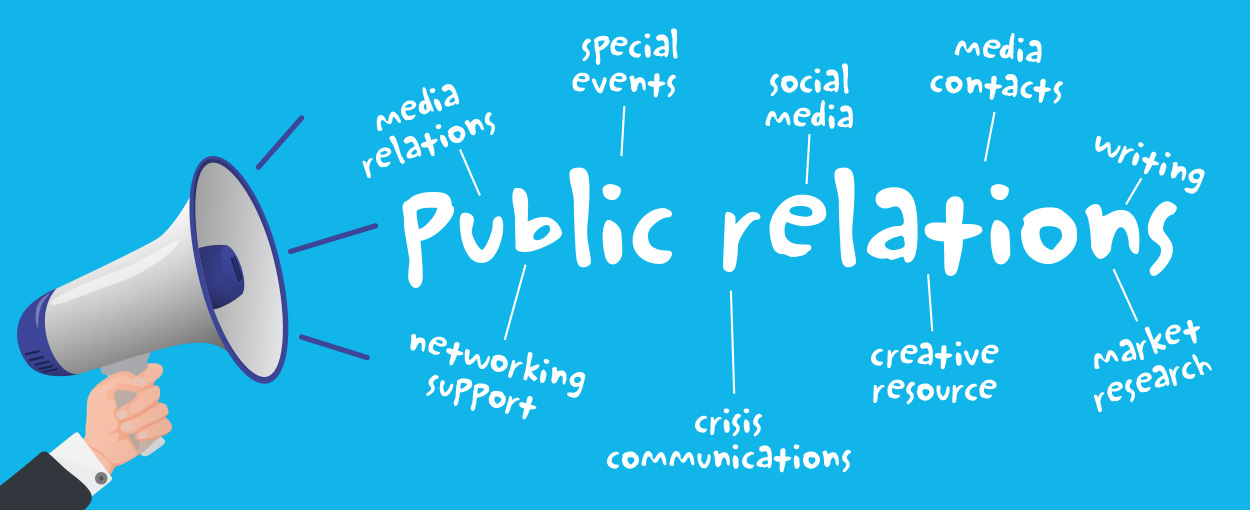
In this blog I will not only talk about the roots of Public Relations, but also how to be successful in it. Breakthrough lines of

The greatest showman P.T. Barnum said once “Ever Publicity is good publicity” but I think that is something to think about twice. If your company comes in bad daylight because of negative attention, it can cost you a lot of money or even worse, ruin your company.

I believe more in what Edward Bernays said; Public relations should apply social science research and behavioral psychology to complaints and messages. Why? Because that is how you know where your audience is interested in and even more important; how you send your message as a publisher to your audience.

What is PR?

Personally, I thought that Public Relations was more about advertising and the communication between the company and the target group. I thought public relations were the ones making the ads and plans to trigger the people. I am not wrong, but it is so much more than I thought.
The main difference between early public relations and public relations nowadays is that now, you need to have a strategic communication plan that builds a relationship between your company and your audience, which was not necessary for the past.

How to be succesful in PR

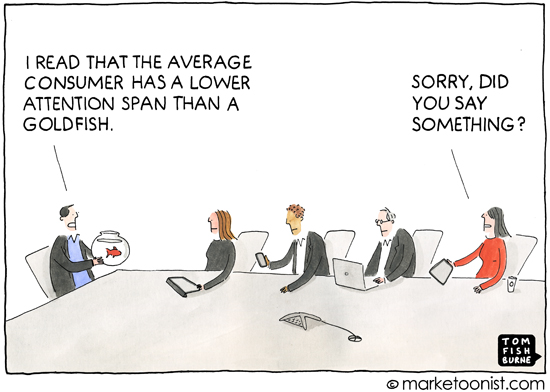
To be successful in public relations today you just don’t write an article, you have to tell a story. A short story, because we have a short attention span, literally less than 8 seconds is the average on something we read.

https://marketoonist.com/2014/10/attentionspan.html

What to be succesful in PR? Work on your planning and brainstorming a lot!

As a company, you want to make sure that the content you show fits with your audience. That is not as easy as it looks likes, especially with all the competitions nowadays is having a good strategy a must. AdAge.com gives five tips to make your content resonate with consumers; the content must be applicable yo your audience’s behavior and interests, you are competing with the rest of the world to get attention, so you must be different, hats why you have to create breakthrough moments. Cross-platform, your content can inspire a cultural movement, Be visible and ever-changing. 

Because the PR-sector is constantly changing, it is important to be pro-active; read stories, look for new content and analyze what trends might be coming up. Dare to try out new content so you can see what works!

~ Daphne Nierop, DFreshWriting

The Future of Journalism might be in Danger

At least, if we don’t stand up now. Because as you might notice, the way we consume news has changed over the last years. It is not you sitting in a chair, trying to hold the newspaper and turning the almost unwieldy pages at the same time, while you’re drinking your morning coffee. No, – you are still drinking your morning coffee – but you are scrolling down your newsfeed with just one finger on a device that is almost the same size as your coffee mug.

In this blog, I will explain why the future of journalism is in danger and why it is important for us – as the future – to find a working business model and what we need to do to make it a successful one. I will address the switch from written to online news, what the consequences are for us by gather news in different ways and what native advertisement has to with this all.

TThe online platforms are replacing the written papers, but if we are not starting to act up, there will be no newsfeed to scroll down anymore.

Let me explain it to you.
Over the last years, the way we consume our news has changed drastically. We don’t take the time to read a whole newspaper anymore. People want to read about topics they are interested in, we filter fast, and that is something we have always done. But now, we don’t have to buy the whole newspaper anymore. We have not only more access to what we are interested in, but we also consume it way faster. All kinds of new information can be uploaded in a second and that’s why the audience for the news companies gets bigger and bigger, which is positive. But, the problem is that the revenue is still shrinking. Nicco Mele ’s (academic writer, businessman, and expert on our fast-moving society) anticipants; if we don’t have a business model that will save the decline of the revenue in the next 3 till 5 years, at least one-third of maybe half of our 50 biggest news companies will go out of business. 

Online platforms & news shown on TV are based on what’s written in the actual newspaper. We need our reporters!


The news organization’s main income is advertising. Whoever wants something written in the newspaper has to pay for it. But now, companies can upload their own content by uploading and sharing their information on their own webpage and that’s why newspapers are losing their main income. This shift ensures that news companies have to come with new solutions to make money. One way is Native advertisement. But is that enough to pay the news reporters? and is Native advertisement true journalism?

Native advertisement

Native advertisement is mostly used by social media feeds. These ads are used to match the look, feel and function of the media format in which they appear. Yes, it a good way to make money, but I believe that these kinds of advertising have nothing to do with journalism itself and I agree once again with Nicco Miele that if you use advertisement as a model to earn money, that ok, but don’t let it overshadow the news itself. I believe that nowadays it is hard to find the real news between all those advertisements.

Searching for a solution

Also, I do believe that people are willing to pay for newspapers to receive news, but I think that there are a couple of things you as a news provider has to think about.

Looking at these 10 successful business models from different companies, such as The red Bulletin (magazine), they all have similarities. I summed up some important points I believe are necessary to make a successful business model for journalism. Another option is what The Guardian did; Transforming to a non-profit organization. 

“It’s key to have a good knowledge of your customers to build a successful business.”

www.whataventure.om
  1. Free is the core, benefits (premium version) comes with money. People are willing to pay for extra news, puzzles or none-advertisement pages, but they need to get triggered. You have to show them first who you are and then what the benefit is of taking a subscription.
  2. Crowdfunding. People love to be a part of something bigger, they love to help someone in need, but they have to know it first. Tell your story and how someone can help you. But don’t ask for the amount, give people options how much and how often they can give. In this way, people feel that they have control over there money and that there are not “stuck” with it.
  3. News reporters. We need our news reporters. Because without them, there is no news. Online platforms and news on TV rely on the stories of our news reporters. It is the only way to make sure what you tell, write or show is trustworthy, But without money, we can’t afford them to do their job.

As you have read, the time is ticking. But I believe that if we can build a business model with Free isAs you have read, time is ticking. But I believe that if we can build a business model with Free is the coreCrowdfunding, and News reporters as the core, we have to find a way to survive. Because what if you walk down the stairs, make a fresh cup of coffee, ready to read the latest news and there is no news to scroll down…

~ Daphne Nierop, DFreshWriting

Are we more open and Connected?

In my previous blog, I talked about the impact of technology and I questioned if we -in a world as it is today- are still able to live without it. Now the question I am asking you, is if we using social media a benefit in our lives is did it become a threat? 

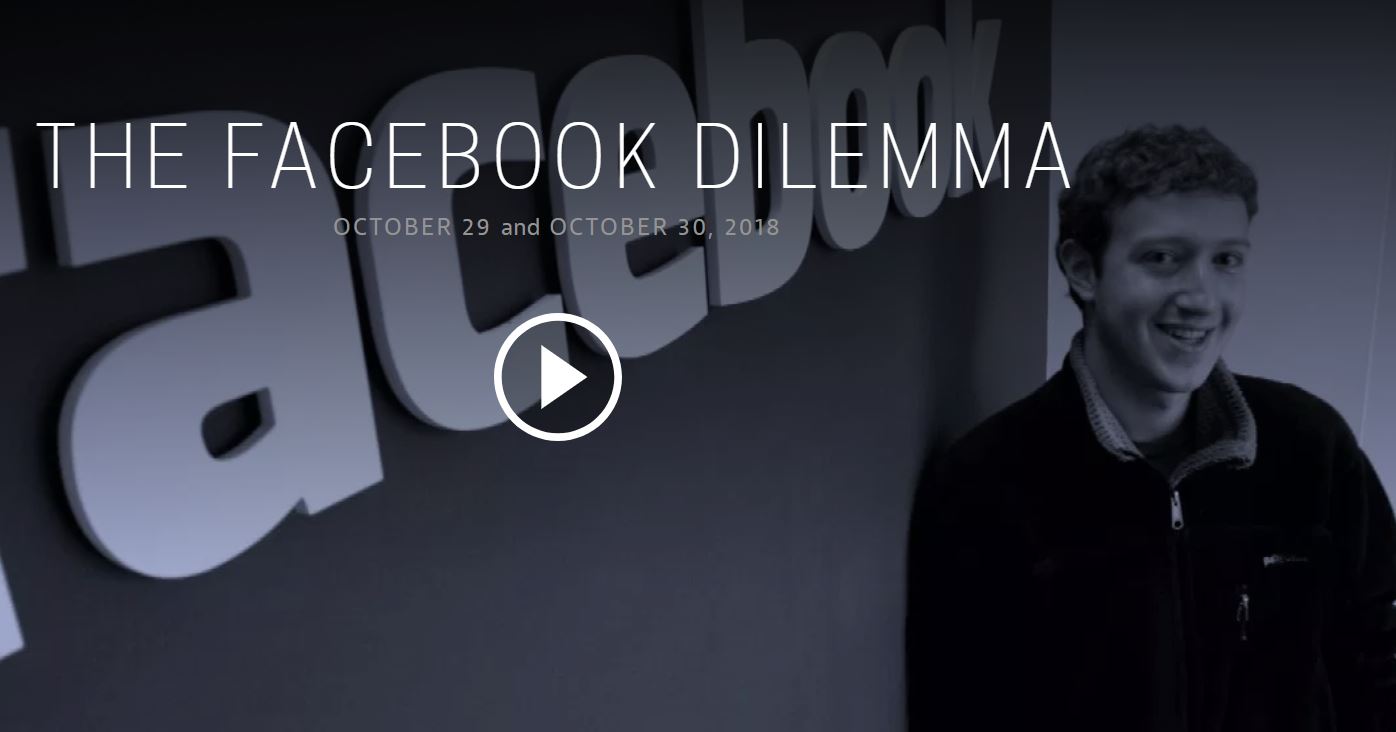
Last week I was watching The Facebook dilemma, which is a two-part documentary about the rise of Facebook and how their mission of making the world more open and connected evolved. Marc Zuckerberg and his friends went from bringing Harvard students together till connecting at a global level. But, did they grow to fast?

After watching the documentary, I was thinking about the impact of Facebook on our society. I feel like Marc was so focused on moving forward, growing as a company and “the more people connected, the better” that he forgot something else. 

While I was watching the documentary they came to a point where Facebook becomes not just a platform where you share your posts with your friends, it started to become a business. Because people who see something growing globally, they start thinking about how to make money with it, which is not always in the benefit of the cosumer.

Everybody is responsible for what they share, but I think that as a company you have to be clear in what you do with all the information that people share. Sharingf posts, clicking on like buttons and scrolling down you timeline looks innocent, but it is terrifying to see how much personal data Facebook has about you and I think that’s dangerous. Not because Mark itself wants to do something with it, but because of the mean people in this world. Wgere people smell money, they will manipulate people in a way they can benefit from it. 

For example, especially in the second part of documentary, they talk about how Facebook is used to manipulate the U.S elections. For me this was a point where I thought that Facebook’s mission of being open and connected has a pretty dark side. Politicians started to use Facebook as an advertisement tool, and also the new term Fake news started to raise and Facebook got used as a tool to turn people against each other. It went so far that people used Facebook to gather people and to start a rebellion. 

Facebook answer was that they were too slow in their reaction on the those dark develops, but I think its just selfish and naief. If you are global, you have. to know that there are always people that want to take advantage of your system.

By making the world more open and connected, Facebook made also another impact, They changed the way of sharing information. They way journalist are doing their job today and will do in the future has to change to stay alive. For newsreporters and writers, it not just about spreading the information. Nowadays you have to think about how you engage with your audience.

Journalsim is dynamic sector and the only way to survive is to evolve. if you don’t change with how the world is growing, then you will drawn. I read this artcle last week and came to a couple conclusion to stay alive if you want to share you information.

My first takeaway is that you have to make clear what your mission is, make it not to broad, but narrow it down to one or two strong one and write those out in detail.

I think one of the takeaways I have from both the Facebook documentary I watched and this article I read is that you have to creative a creative platform what is able to move due to the circumstances the world is asking for.

I believe that the real question we have to ask oursleves is; What can we believe nowadays? Separating the truth from what is fake becomes harder and harder, because the information we consuming gets more and more. Everybody has access to write want he wants, it’s more about how good can you write? Which strategy are you using to make sure people believe what you write, even though it might not be true..

Because there is so much more information thrown at us, the rule of being faster than your neighbor is popped up. you have to be quick, you as the one that spreads the news need to be faster than the other channel, which means that the credibility might come in danger. But, remember that credibility is rare those days and it might takes a little more time, but if people know that they can trust you information, you become more valuable and people always come back to you.

~ Daphne Nierop

What to Believe?

Knowledge is power. I believe that the more you know, the more capable you are in making the right choices towards your goals. Everyday we use sources to increase our knowledge, but how do we know that the information we get is true? Can we believe what we read, hear and see? How do we separate the facts from the fables? Today, we have more access to information than ever before. Where newspapers, radion, and TV where the main sources 30 years ago, is now the internet the place to be.


And since the world added the term “Fake News” to out vocabulary, people start questioning more. In this article of the New York Times, they discuss how much of the internet is fake, which my question back is; but who says this article tells us truth. Everybody with a device and anytype of internet service can share their thought with the rest of the world. Yes, this is positive because the world get more open and connect, but on the other hand, people can say whatever they want, there are no rules what you can and can’t say, and let’s say you are kicked off the internet, you make a new account and you start again

Being Connected

Facebook consider itself as a platform where people can connect, you share with your friends your photo’s and stories, and you can like and comment on others. Facebook is created by Marc Zuckerberg  and other Harvard Students, because they wanted to create platform with the mission to make the world more open and connected. The benefits of being connect by using Facebook for example, is that you can still in contact with the friends you met on the other side of the world, or you can see whats happening in the world by scrolling down you timeline feed. but, if it comes to a real relationship, can we replace the emotional contact with a person by a text of a video? I feel like we can’t. I believe texting, Facetiming, or sending emoji’s is something you can use to express you emotions, to let them know how you think about someone in a particular way, but it can never replace the emotional side of a real conversation, a real hug, or kiss.

The role of Journalists

As I mentioned before, how we consume the news has changed over the years. This change has consequences not only for the consumers self, but also for the creaters of the news. As humans, we give a article, video, or phote only three seconds to get our attention. Also, everyone can share their news by writing blogs, or having a Youtube channel, that’s why journalists have to be more creative to spread their news to get the same engagement, but with all the competitions, the credible can led behind. Bus as a journalist you are resposible that your news has fundamental sources, because if we, as the one whose job is to spread the news, shares fake news, what can people still believe?

~ Daphne Nierop

“The most fundamental change is that more of the responsibility for knowing what is true and what is not rests with each of us as individuals”


My 4 Hours without technology

Does this sound easy for you? to be offline for just four hours? For me, it did, because I was convinced that during a day I don’t use my phone that much. Although that might be true, I forgot about the fact that technology is so much more than just your phone. It is doing homework on your laptop, listening to music, watching a movie and it’s is the smartwatch on your wrist. We spend so much time during our lives using technology and in a world, as it is today, Being connected is more important than ever before, but why is it so hard to spend a couple of hours without? I think this is a question worth it to try out and that’s why I decided to go offline.


But what is the best time to go offline? How am I able to ask something to someone and what if I miss an important message of someone needs me? I already started doubting, before I was even started, which made me realize already on how dependent I was of using technology.

I decided to start last Thursday from 11 am – 2 pm, which was I thought perfect because most of my time was already covert by being in class. But sadly enough I was wrong, my first try failed immediately. After my morning workout at 6 am, I got a text what time I could have lunch, I was worried that I would miss information for the upcoming event that night, and family from back home (Holland) asked if I could FaceTime in the afternoon. So, I decided to move my challenge to another day.


It was Saturday morning, when I started my second try, this time I had no choice. My boyfriend (Romack) and I were eating breakfast downtown at Cracker Barrel when I started to tell him about my experiment of going offline, but that I failed and 3 days later, I still didn’t do it. I wasn’t even finished with my story when my boyfriend stretches out his arm and commanded me to hand over my phone; “let’s start now”. I wrinkled for a second, but I agreed and hand it him my phone. From now on, it was only 3 hours and 59 minutes to go…


While driving home we made a plan for the day. A couple of minutes later I was wondering what time it was and looked at my watch, perhaps my watch buzzed and I got a message. I forgot about the fact that my Apple watch is technology too… Romack looked at me, I took it off and put into the dashboard. During the day, I became more and more aware of how much technology we have around us. It was not only the personal items that where tech, but also open spaces. for example, every door on campus is secured and can only be opened by your pass. So, technically I couldn’t even go to another building during my four hours without using technology…

a Life With Technology vs Without Technology


Nowadays, using technology is not only for our social satisfaction, but it also a need. we need technology to make our lives safer, we use the navigation to find our destination and a lot of paperwork is transferred to be available only. But it is good to step away from it sometimes. for me, four hours offline turned out into a relaxing day, but very productive. I was able to be more in the presence of what I was doing. I finished my reading, worked out and found out that it is mostly our mind that gives us the idea that we need to be connected to the world all the time, but once we agree to be offline – even if it’s just an hour or two – you notice after you go back online, that you didn’t miss that much.


~ Daphne Nierop, DFreshWriting

The fear of missing out

My name is Daphne Nierop and welcome to DFreshWriting.

In the world, as it is today, I feel like we are more online than offline. Every day it becomes harder to keep up with the trends and the pressure of being liked based on your followers becomes bigger and bigger. Becoming an influencerinstafamous or a vlogger is a serious trend. 

I do believe that this social movement brings us benefits, but for me, the real question is if the importance of being liked online expands beyond real human relationships?

Yes, I agree that we are so much more connected with each other, we can know what is going on on the other side of the world. For myself, for example, Facetime makes it possible to see my dad even though I study more than 4000 miles away from home. Back in the days, when my dad was a teenager and working on the other side of the world, he disappeared for a couple of months. Having a phone call cost a lot of money and there was no wifi to send a quick text. But even though I have so many possibilities to connect with my family and friends while being overseas, nothing compares to a hug in person, and a conversation where you feel the interaction.

The truth is, that living in 2020 we can’t live without our technology anymore, even though you want to. Our Agenda’s, contacts and how we find the route to an event are all centered on our phone, but I believe that the phone is not a tool anymore, but a need. It doesn’t matter where we are anymore, whether we stand in line at the grocery store, waiting for the bus, waking up or eating at the ding table, it has to be one minute and most people grab their phone already. I don’t know if it’s because it easily entertains yourself when you are bored or that you are afraid of missing out? We are either sharing something of our lives or looking at others.

“We are living for the screen and through the screen, rather than for and through each other”

Silicon Snake Oil

I believe it all has to do with attention. When do you decide to look on your phone, and when to put it away. The time you are in the present, that’s when you are building relationships. Having a lot of followers is fun, but will not help you overcome your struggles. Being not on your phone while having a conversation, is not only a form of respect but gives you also the opportunity to listen. The benefits of being a great listener are bigger than you can imagine but are only possible when you are not distracted by something else.

And I know, it’s really easy to hide behind a screen, but I would like you to challenge you, that the next time you grab your phone out of boredness, put it away and observe what is happing around you, listen to the conversations others have, or start one by yourself.

~ Daphne Nierop, DFreshWriting
The media, use or be used

A blog is about the influence of media and how little adjustments can help achieve your most ambitieus goals.


My name is Daphne Nierop, and welcome to DFreshWriting!

I am a twenty-year-old student-athlete at Creighton University in Omaha, Nebraska, but born and raised in Amsterdam, The Netherlands. With a history in the major Sport-management, an education in Sport & Coaching and my interest in food, I thought it was time to switch some things around and try to combine everything together and started the study Journalism. I want to share my thoughts, experiences and lessons about life, because at the end of the road, I don’t want to be rich in millions of dollars (of course it will be helpful) but most of all, I want to be rich in experience. -> read more About the Author


Being Curious is the key to personal growth and knowledge is the key to power. Living in 2020, it’s no doubt that you are surrounded by information, but the question you should ask yourself is what to do with all that information?  The world as it today is shaped around communication and technology and I understand that all those different sources like Google, Youtube, Instagram, and Facebook, can be overwhelming. 

But as you dive deeper into the media, I think it is really interesting why some videos, books, music or podcasts go viral and others don’t? while all have great context. Besides the discussions of social media and its distractions on students, the media has some really good influences too. You can educate yourself without the need of a teacher. For me being an athlete, the media is an opportunity to discover new ways of training and to look up information about the people who inspire me. I gather my information by watching documentaries and speeches, by listening to podcasts and reading books about the people who I think I can learn from and who can teach me the tools to come closer to my goals. One of my favorite platforms to look up  Ted.com, where I watch speeches of people all over the world with topics vary from technology and business to global issues. Recently I was looking for tips to help myself being more productive when it comes to studying, which turned out in watching this Tedtalk from Stephen Duneier in how to marginalizing big projects to help to achieve your biggest goals.

“What stands between us and achieving our Biggest Dreams, has far less to do with possession a magical skill or talent, but more to do in how to approach problems and making the decisions to solve them”

~ Stephen Duneier

So, talking about media, I believe there are a lot of benefits. You can reach faster to someone you haven’t seen for a long time, and information about your favorite artist is just a couple clicks a way. But the downside is that we are are always “on”. When was the last time you where “off” for more than 5 minutes? No phone, no computer or television. I mean, if I look at myself, I will not lie about the fact that my laptop is my absolute everything, it’s the brain of where I get my information from and it’s the heart of my creative thoughts. But in order to give myself really time to think, it is important to have some time alone, just yourself and your thoughts.

For journalists, the use of media is a good tool to focus more specifically on their target group, but because the internet is a place where everyone can share their information and opinions, it gets more difficult for journailsts to been seen as the only truth. I think it is a good thing that people have multiple sources know where they can get there information from, but it can also be hard in what to believe.

So, coming back to what we do with all the information on social media, I would like you to leave you with a qyestion; Are you the one that uses the media, or is it the media that is using you?

~ Daphne Nierop, DFreshWriting

About the Author

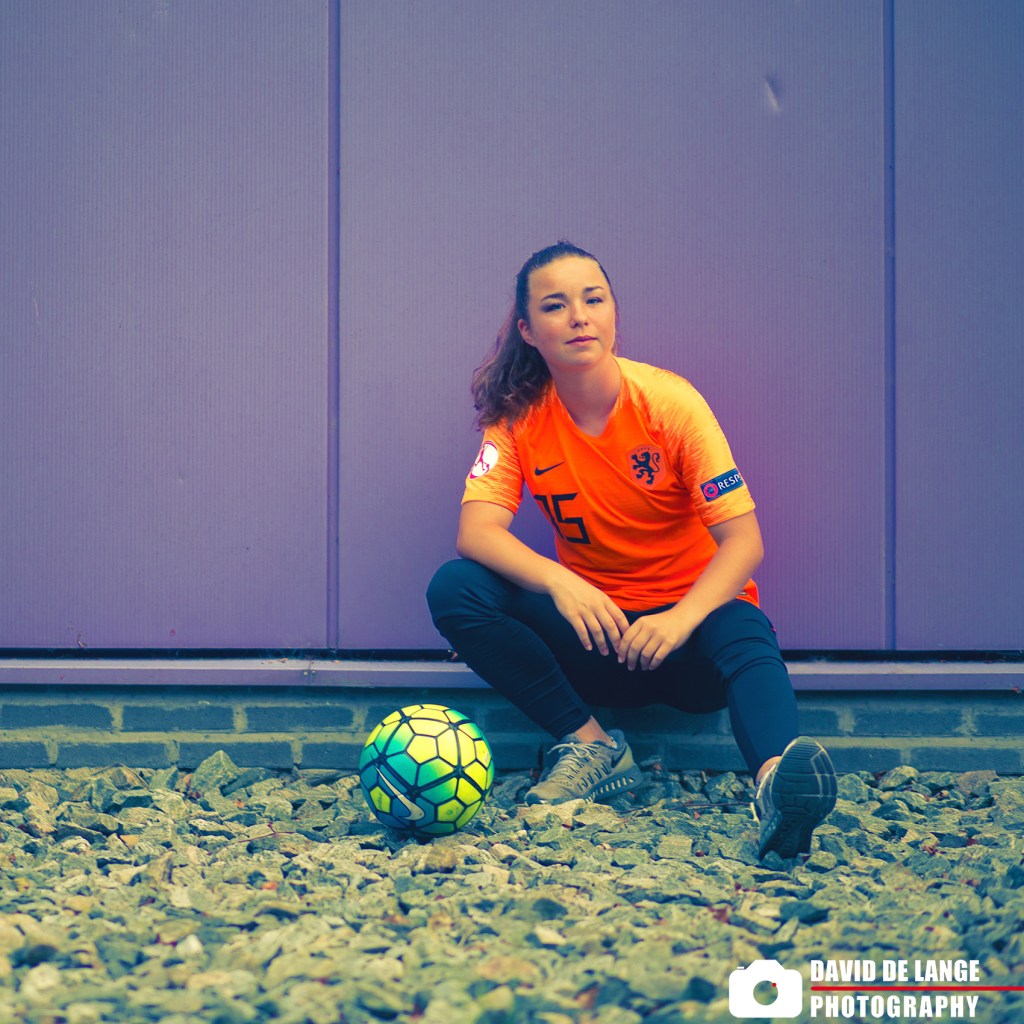
Hi, my name is Daphne Nierop and welcome to DFreshWriting, a blog that allows you to look behind the scenes of a Division 1 student-athlete, who is born and raised in Amsterdam, the Netherlands but is currently active as a sophomore at Creighton University in Omaha, Nebraska in the United States of America.

Walking on the same earth for 20 years now, I realize that the one sport I fell in love with since I was five years old, gave me so much more than just the game itself. Every choice I make in life has to be to become a better soccer player on and off the field. Soccer is not just a game about who scores the most goals after 90 minutes, but about being a member of something bigger than yourself, about leadership, commitment and discipline. It teaches me the biggest lessons of my life and it made me the person I am today.

“Every choice I make in life has to be in order to become a better soccer player on and off the field”

Coming from a family with a 2,5-year-old sister and a dad who are both really active in sports, it’s no doubt that we all have a competitive mindset too, whether if it comes down to winning a game or a current event in our daily lives. But what’s for me more important than only achieving my goal, is how I work towards that goal.

Also, I am passionate about everything around food. Of course the eating part, but even more to cook for another. Food is emotion, and sharing a meal is bringing people together. I love to write, whether it’s about food on my foodblog called DFreshFood or just about everything that inspires me on a daily base. I am curious about other people there culture and how they deal with the highs and lows in life. At the end of the road I don’t want to be rich in millions of dollars (of course it will be helpful) but most of all, I want to be rich in experience. 

~ Daphne Nierop

“At the end of the road, I want to be rich in Experience.”

Ontwerp een vergelijkbare site met WordPress.com
Aan de slag